
 Elza Erkip Receives 2026 Aaron D. Wyner Distinguished Service Award
 Theodore Rappaport Elected to American Academy of Arts and Sciences
 Wirelessnerd.org is ready for your queries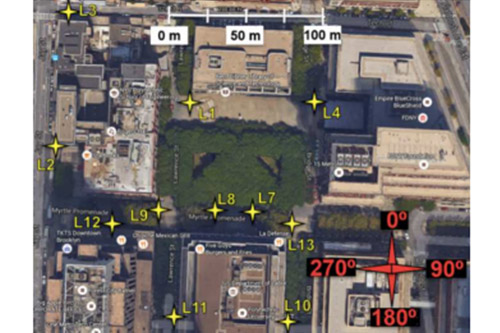


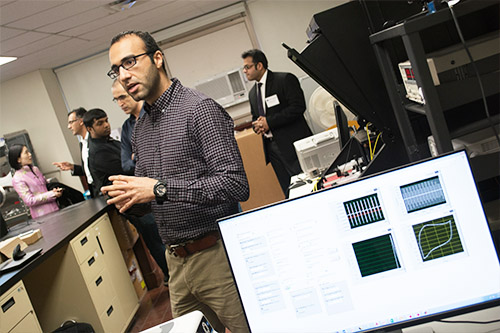
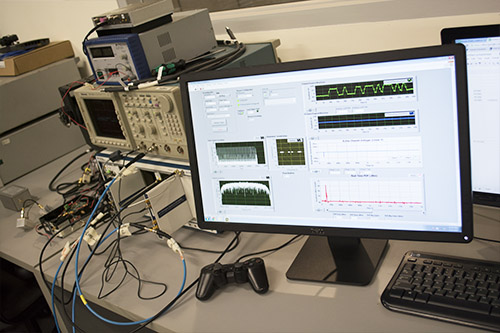
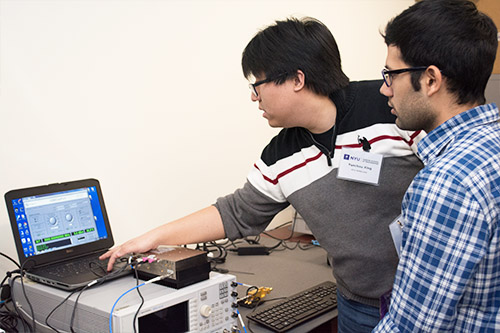
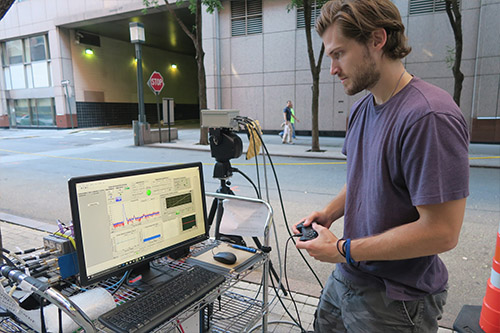

One-of-a-kind THz measurement facility (THz Lab) for exploration of devices, circuits, and radio propagation up to THz frequencies
NYU Wireless P.I.s
Research Overview
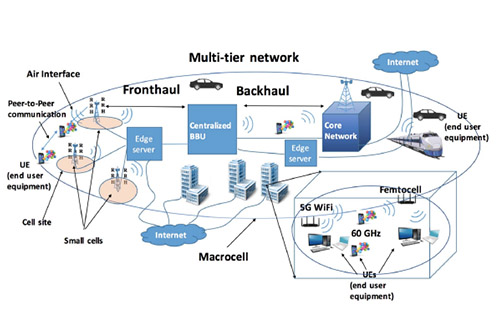
The Terahertz Measurement Facility (THz Lab) — a collaboration between New York University, University of Colorado at Boulder, University of Nebraska–Lincoln, and Florida International University — is a laboratory for the global expansion of the knowledge of devices, circuits, materials, and radio propagation channels at the highest reaches of the radio spectrum (up to 500 GHz). While today’s cellular telephones and Wi-Fi networks operate at frequencies below 100 GHz, there is great promise for new wireless applications by moving up to the underexplored sub-THz and THz frequency bands – frequencies from 100 to 500 GHz [1]-[3]. The THz-Lab is enabled by the NSF: Major Research Instrumentation (MRI) grant and provides a facility to explore wireless components and systems at these sub-THz and THz frequencies [3].
The THz Lab primarily supports three areas of research:
1) Radio Frequency Integrated Circuit (RFIC) measurements
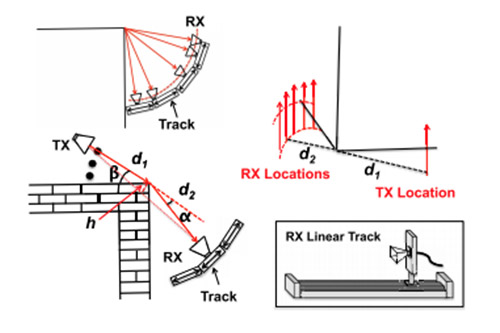
2) Radio propagation and channel modeling, and
3) Metrology and calibration, over the contiguous frequency range of DC to 330 GHz.
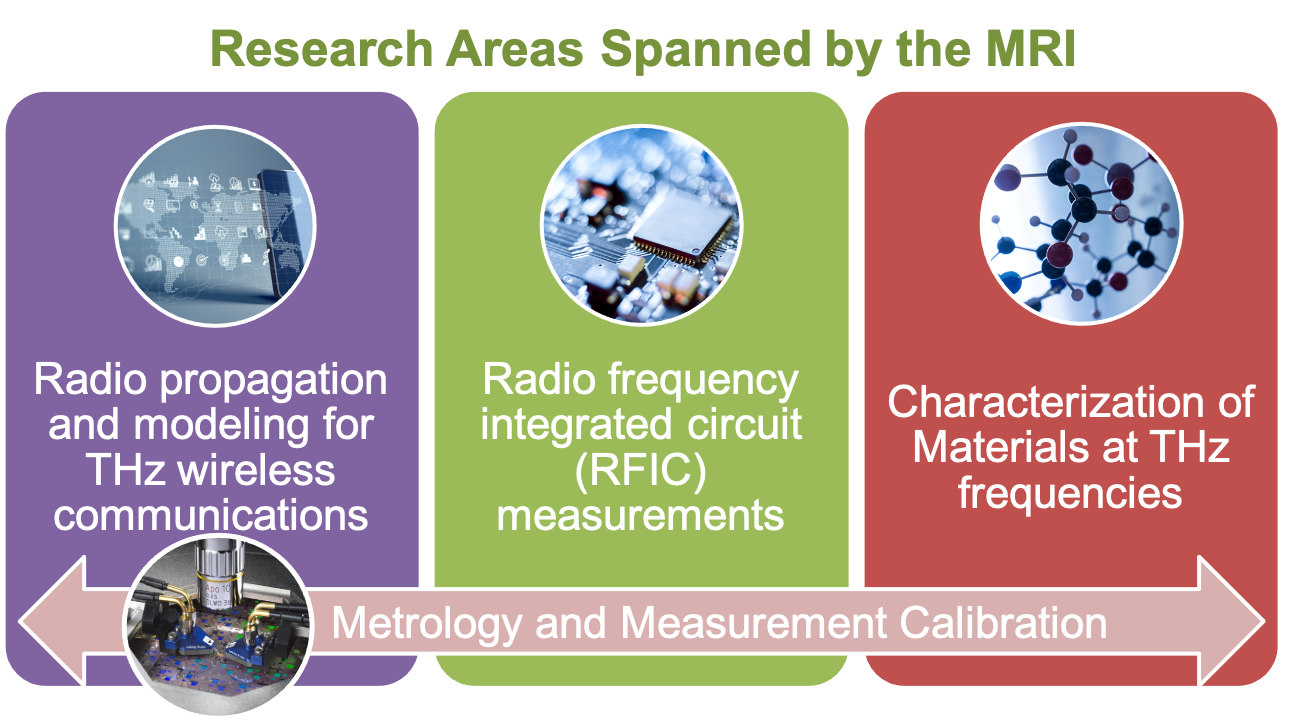
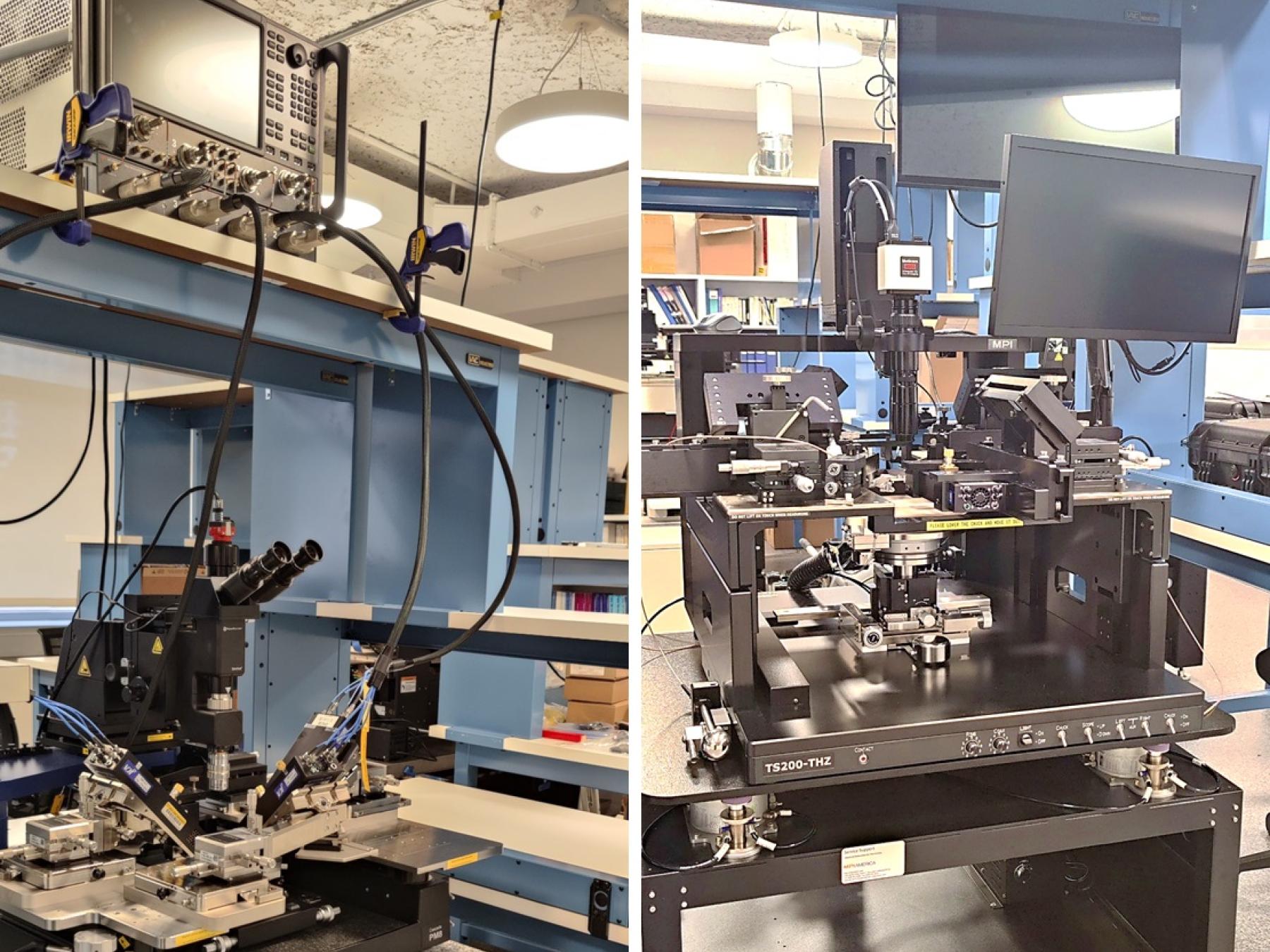
The THz Lab has a broad inventory of RF devices and components to support the three research areas up to 330 GHz. Two of the world’s first probe stations designed for simultaneous four-port probing are housed in the THz Lab. The two leading probe system manufacturers: MPI Corporation and Formfactor Inc., independently designed a four-port probing solution for the THz Lab [1]. As part of the THz Lab partnership with vendors and NYU WIRELESS industrial affiliates, a novel Short-Open-Load-Reciprocal calibration technique was designed for on chip measurements up to 125 GHz using the UMC 28 nm CMOS technology [1]. Details can be found at: https://engineering.nyu.edu/thzlab
Upcoming radio propagation measurement campaigns target the 3.7 GHz lower mid-band, 180 GHz atmospheric absorption band, and 220 GHz and 285 GHz sub-THz bands to continue pioneering research across the radio spectrum. The campaigns will add to the gold-standard propagation database at NYU WIRELESS spanning measurements at lower and upper mid-band, mmWave, and sub-THz frequencies [2].
This facility will have a broad impact on the future of communications, materials, and devices. The creation of new calibration and metrology approaches are vital for accurate and repeatable measurements throughout the US research community in this underexplored range of frequencies. The study of nanotechnology devices using the RFIC probe station will unleash new capabilities in sensing, communications, and computing that may have a transformative impact on society. The radio propagation measurement systems offer vital knowledge for researchers in industry, academia and international standard bodies who will design future high-speed wireless networks for 6G, 7G and beyond.